

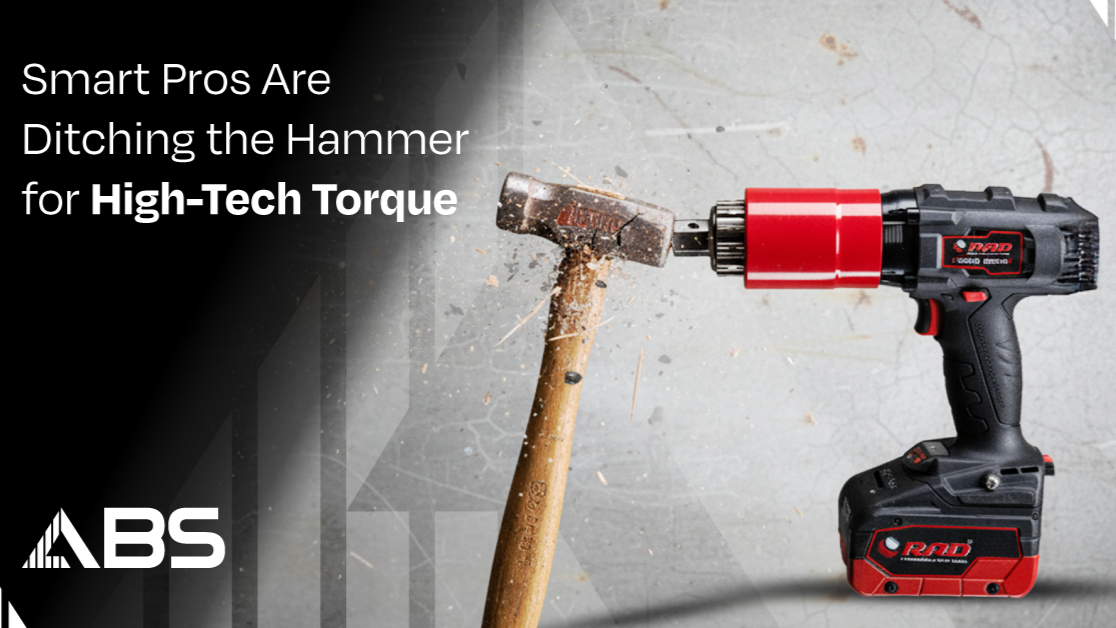
Smart Pros Are Ditching the Hammer for High-Tech Torque!
Precision, safety, and durability are non-negotiable in demanding industries. So, if the tools you use are adding risk, noise, and inconsistency to your day, it's time for an upgrade. More professionals—from aerospace engineers to wind farm technicians—are moving away from traditional impact wrenches and embracing the controlled power of gear-reduction torque wrenches.
Why the switch? Let's break down the advantages with a quick Q&A.
❓ Q&A: Impact Wrenches vs. Gear-Reduction Torque Wrenches
Q: What's the fundamental difference between the two tools?
A: Think of it as a boxer versus a bodybuilder.
- 🥊 Impact Wrenches deliver torque through rapid, high-speed hammering bursts. They're fast for loosening bolts, but this mechanism creates inconsistent torque, high vibration, and quick wear on both the tool and the fastener.
- 💪 Gear-Reduction Torque Wrenches (like the industrial models from ABS) use controlled electric or pneumatic motors paired with internal gearing. They apply torque smoothly and precisely, ensuring consistent output and better integrity for the component.
Q: Why is precision so much better with a gear-reduction tool?
A: Because they're built for control, not chaos.
Impact wrenches rely on bursts that can easily overshoot or undershoot the required target torque value. Gear-reduction tools, conversely, offer programmable torque settings and deliver smooth, repeatable results.
This is critical in environments where precision is a safety or operational mandate, such as:
- Aerospace and Defense: Where tolerances are extremely tight.
- Rail Systems: Where fastener security directly impacts public safety.
- Data Centers: Where uneven torque can damage expensive, critical infrastructure.
Q: Does switching to a gear-reduction tool really save money in the long run?
A: Absolutely. While the initial investment may be higher, the Total ROI (Return on Investment) is superior because of extended lifespan and less downtime.
Gear-reduction wrenches operate with fewer high-impact internal motions, meaning they wear down much slower. The gears experience less friction, and modern brushless motors have fewer failure points. This translates directly to:
- Lower maintenance costs.
- Less frequent recalibration.
- Fewer unexpected repairs—keeping your job site running smoothly.
Q: Can a torque wrench actually improve my work environment's safety and comfort?
A: Yes! This is a major factor in the shift.
Gear-reduction wrenches are significantly quieter and produce substantially less vibration than their impact counterparts. In industries already dealing with high decibel levels and demanding work, minimizing operator fatigue is a growing priority.
This quieter, smoother operation makes them ideal for:
- Extended-use jobs where vibration exposure can be an issue.
- Indoor facilities with noise restrictions.
By reducing both noise and vibration, these tools help companies comply with modern workplace safety standards related to long-term exposure.
The Verdict: When Should You Make the Switch?
Impact wrenches still have their place for quick removals or low-precision tasks. However, if your work demands consistency, precision, durability, and operator comfort, the gear-reduction system is a must-have upgrade.
The world of fastening technology is moving to controlled. By improving job site safety, reducing equipment wear, and ensuring fasteners are tightened to spec every single time, gear-reduction torque wrenches represent the next evolution for serious professionals.